 100% Personal advice





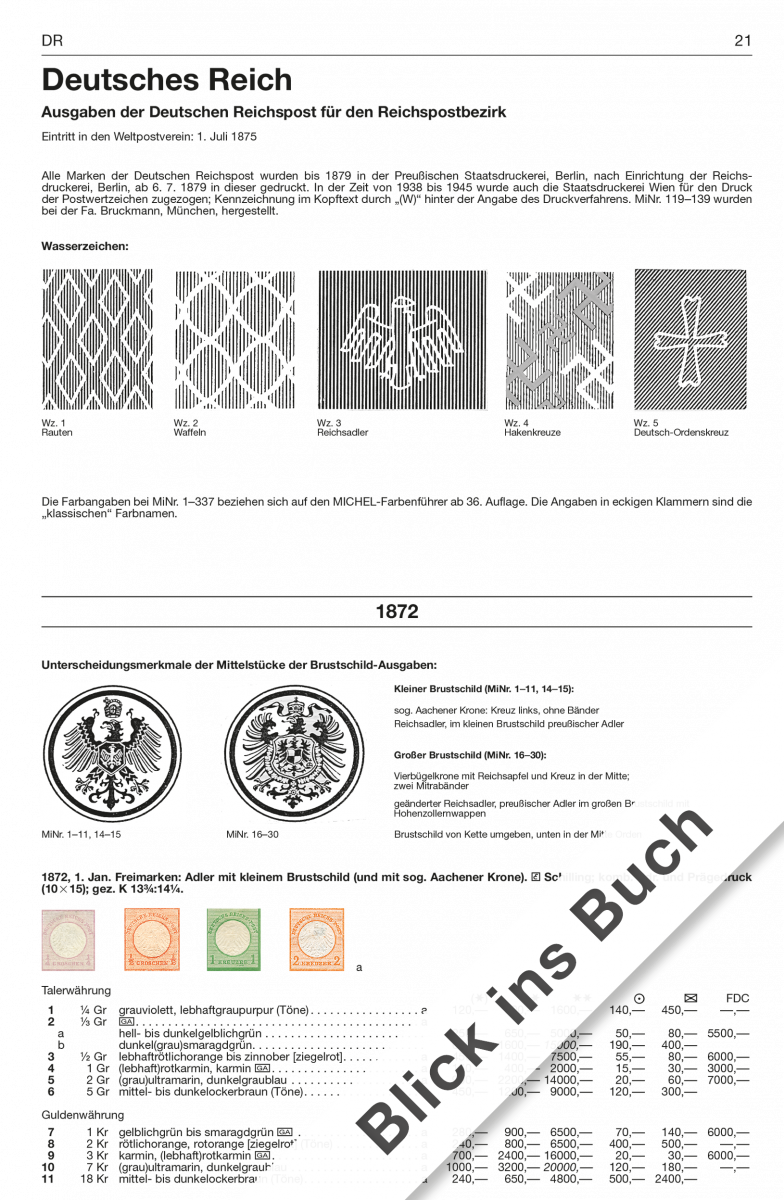
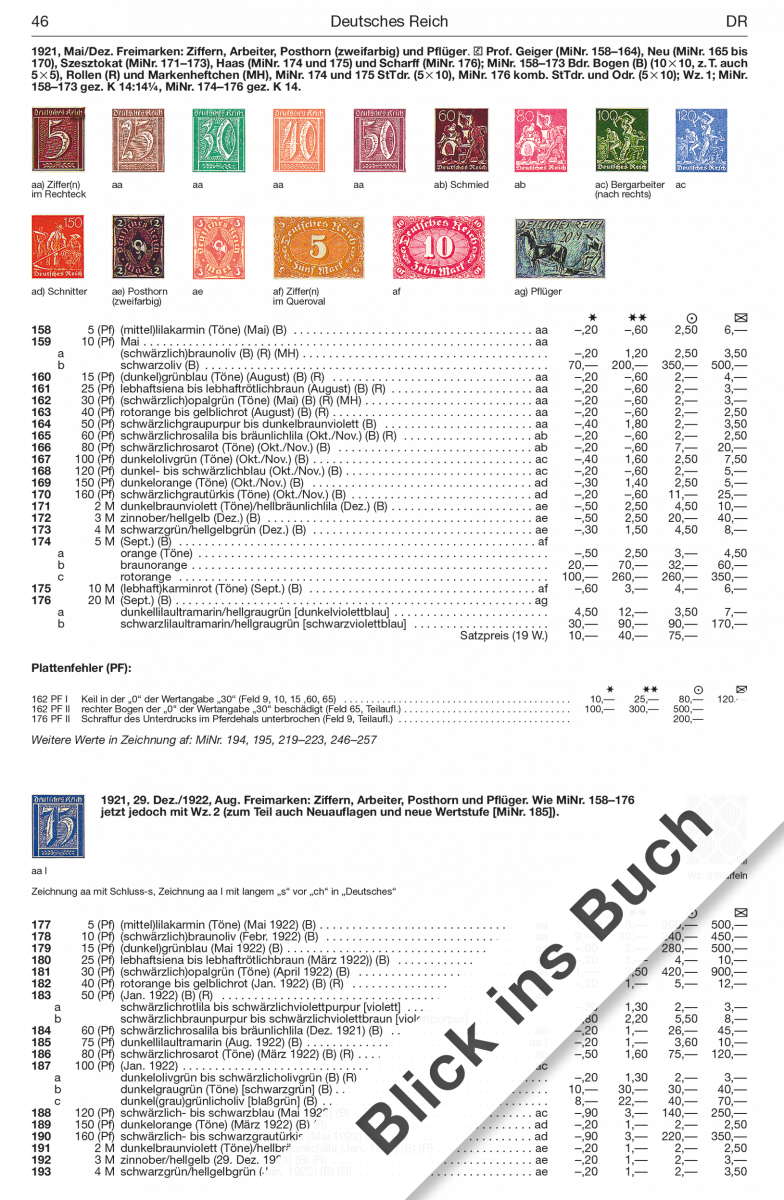
With this fourth edition of the MICHEL Handbook “Plate Flaws German Reich 1872–1945”, you are holding a compact and clearly arranged excerpt from the MICHEL Germany Specialized Catalogue 2025, Volume 1. Thanks to a thorough optimization of the layout, all essential information on the plate flaws of the German Reich has been compiled on fewer pages than in the previous edition.
Collecting plate flaws has enjoyed long-lasting popularity. Plate flaws not only cause sometimes curious changes in the appearance of a stamp, they also provide information about the quality of the printing. A flaw can occur during the production of the printing plate used for the stamps, but more often it arises during the actual printing process. The reason is wear or damage to the printing plate. Thus, a concentration of plate flaws within a certain production period can also offer insights into the general economic conditions under which the stamps were produced.
From this perspective, it is not surprising that plate flaws are more frequent during certain periods, while in others they are rather the exception. The stamps of the German Reich illustrate this very well, which is why collecting plate flaws is particularly popular in this area of philately.
The MICHEL Handbook “Plate Flaws German Reich 1872–1945”, an excerpt from the MICHEL Germany Specialized Catalogue 2025 Volume 1, is helpful because it summarizes both the basic stamp descriptions and the plate flaws known to date in a compact form.
Since the last edition, further plate flaws have been discovered through philatelic research and have been incorporated into this catalogue. In addition, more colour detail illustrations of plate flaws can now be shown. With this, the volume provides collectors with the most up-to-date knowledge of the plate flaws of the German Reich in a clear and accessible manner.
You will always receive the latest available edition. The catalog has a hard cover.


